

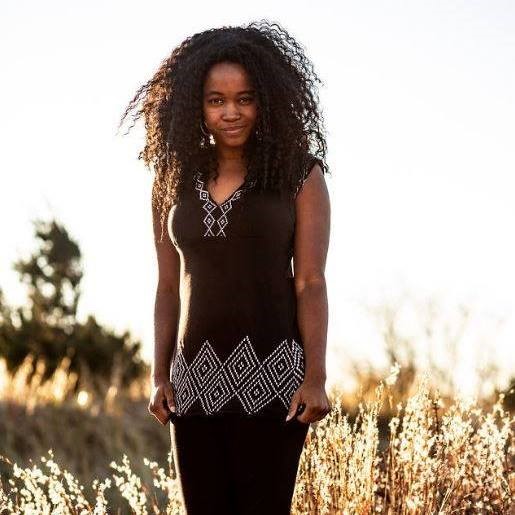
I am always amazed, humbled and surprised by the level of genius that is around me in my daily life. When I think I have a handle on the potential people are capable of sharing with one another, when I believe that the level of brilliance and imaginative fluency has been reached by the number of individuals I know . . . that’s usually when I have an abrupt comeuppance in carrying an attitude like that around.
Every course I have taught, or been in as a student, over the last—at least sixty years—has shown me that the heights people can reach by the conceptual passion they carry within them are just a breath away from revelation.
Case in point: Filmmaker Raeshelle Cooke.
This post is the second article that explores her work and thought as a cinematic storyteller.

Actor Sean Brown in Raeshelle’s film, Wrath City (2017). Photo by Mike Sun.
Was there a particular event or time that you recognized filmmaking was not just a hobby, but that it would be your life and your living?
I’ve never liked it when paid filmmakers criticize filmmakers who aren’t making money with their films, especially by telling them that they don’t take their career seriously and that it’s a hobby. Collecting Yu-Gi-Oh! cards was a hobby. Drawing cartoons was a hobby. Filmmaking is a little more serious to me than that.
While we’re on the subject, I also don’t agree when people say you have to work as a PA and bring people coffee and work your up that way up so that you can be a paid filmmaker one day. No. How about I just buy a 4-plex and rent it out, and use that money as income to fund my own films? We’re not on that begging–for–validation wave anymore.
Hashtag: Fund yourself.
People are distributing their own films and funding their own stuff. I also don’t agree when people say you have to make sacrifices and be willing to starve if you really love this and want to be serious. I love this and I am serious and no, I would not starve for it. Not for this or anything. Like, have you starved? Do you know what it’s like to starve? Do you know what it’s like to be so skinny your ribs poke through your skin? Stomach pains? You sure you want that? Just to make a film? It’s not fun to starve. No one should say you have to make those sacrifices to do this or be serious. I will never starve again as long as I’m in the driver seat. You’ll never see me starving for nothing. If you’re starving and can’t pay to make yourself a bologna sandwich, then how are you paying for a full film production? How will you fund yourself if a producer rejects you because you, let’s say, post on social media that you have a problem with cops shooting and killing unarmed black people, for instance? How do you have the energy to be creative if you’re starving?
When I was starving, I was lying down. A LOT. Let’s be smart and practical. Don’t starve yourself. Please don’t do that.
I love making shorts, and writing shorts more than feature–length screenplays, even though I wrote 3-4 feature–length screenplays years ago. But with the short films, it’s more fun and creatively fulfilling. Shorts challenge you to create an engaging, fun and clever story within a short amount of time. Shorts to me, are like riddles that you write and give to the audience to solve. Shorts are like a punchline. Shorts are fun; they’re like the short stories I used to read in English class that, when I got to the end, I smiled and thought “Ah hah….clever.” Not to say you can’t do that with a feature, but it’s much more difficult.
The above photo shows Raeshelle directing Malden-based music artist Chaud Galliano, in his French music video called Fatoumata (2017).
–

Alfred Hitchcock did it perfectly in his features. I need to figure out a feature-length story that I can find fun and fulfilling enough to write and direct.
Lately, I’ve been going to New York a lot and establishing connections with the filmmakers down there. I try to align myself with successful people; people that are smarter than I am, because then I will learn from them, and when you surround yourself with 9 successful, more experienced, wiser filmmakers, you will be the 10th successful filmmaker (and “successful”, I mean making money directing, or selling films).
I’ve taken workshops on the business side of film and am attending film festivals in NY, and what I’m learning is, there are key things I haven’t done or even thought about that I need to start considering as far as business goes. And planning goes a long way. I’ve figured out that I can and should write or direct a sellable script, and I can do it in a way that’s fulfilling if I work with writers that are more imaginative than me in a particular genre.
Let’s say, for example, Horror: Horror is lucrative and their audience is very loyal and forgiving, so if I want to make non-music-video money, like, GOOD money in this industry, then I should look into making a Horror feature film. But since I’m not a Horror writer, what I can do is work with Horror writers. So yeah! I’m learning the business side.
What was your first movie–making experience, and how did it change your life?
I swear I thought my first movie was good, hahaha. It was a good effort, and a unique story, but the execution could’ve been waaaaaaaaaaay better in terms of my direction and choices in angles and camera movement. The ending still makes me cringe too. Ughh. But it was my first film and that happens. The subject matter was emotional for me because it was symbolic for the way I was feeling at that time, feeling like my brother and I’s relationship had changed from what it used to be. The filmmaking was an emotional, personal experience. I relate to it to an even greater extent today with someone else. But after I made that film, I found that making films like that—with the personal stories and the music—was very therapeutic for me, so I continued doing it and I haven’t stopped since.

Raeshelle is to the left of Dominique LaFleur in the Greenwich Hotel & Lounge. Raeshelle directed her in a short film called Sometime Around January (2015). The film was nominated for Best Short at the Shawna Shea Film festival in 2015. (Photo credit: Slavin Productions.)
What was the most important lesson you had to learn that has had a positive effect on your film? How did that lesson happen?
How to be a better director! I had to realize that my communication as a non–actor could be better. You will notice a huge difference between my first short out of college, Monae’s Room, and my latest short Wrath City [2017]. HUGGGGE.
To get there, I had to do a lot of learning. A lot of listening, collaborating. Taking workshops.
I audit Master–Acting classes just so that I can see what techniques I can use to better communicate with actors. Because I’m not an actor, I realize if I’m going to take my role as a director seriously, I have to learn from an actor how to best direct actors. So I take actor-taught ‘directing actors’ workshops and I audit actor’s classes. I had also signed up to take a non-actors acting intensive, but it was canceled. But next time I have the chance, I will. As long as the class is geared for non-actors, I can get with it, and I will absolutely open myself up to the experience and learn.
If I want to be a great director, I can’t just worry about angles and shots. I have to worry about my communication skills to the actors.
“It all starts with the script.” Maybe not, but when do you know a script is ready to shoot, and what is your process of getting it there?
I have several scripts that some people have read and thought were good, but that I know are not ready to be shot. I have three, feature–length screenplays that, in their current form, I’d never shoot because they have too many holes in them and they don’t make sense to ME. It’s the same with a few shorts too.
If a script doesn’t make sense to me, like if the vision isn’t clear in my head and I don’t understand the point of the story or the goal, or the motivations of the actors, or where it’s going, then I definitely can’t expect the actors to understand. If I feel in my gut that the
Actor Lena Cavallo in a webisode written and directed by Raeshelle, which is a part of the upcoming series One Law. “My webisode is a black female’s perspective on feminism and the 2016 election. I was influenced by 12 Angry Men when I wrote it. The producers of the web series say the entire series will be released this year.”
script is just not right, then I know it’s not ready to be shot. But if I can see the vision clearly and confidently, and I understand the motivations and the goals and the point of what I’m trying to say and how I want to say it, I definitely will shoot it then.

This is a reason why I haven’t shot this short film I’ve been wanting to shoot that I wrote, His Interlude, a musical love story about a woman who’s explaining her side of things to an ex about why their relationship didn’t work out. And she’s doing this with her boyfriend in the same room, PER his request ha! It’s just your typical tale of a twisted relationship with your everyday themes of obsession, sexual passion, and possessiveness. You know, the stuff that makes great music, ha! And of course, my love for music translates into film. So even though I had the music composed and it sounds amazing, I have not been able to write the lyrics or voiceovers in a way that sounds good to me and that captures the tone I’m looking for. So I go back to it every now and then and work on the lyrics to the song. And one day, once I get the lyrics to make sense, and once I get an idea of if I want it spoken, or sung, and how it should be sung, etc.—then I can shoot it. It’s all just a gut feeling really . . . and weird perfectionist tendencies.
What makes a film great for you? Are there certain qualities that make a film better for you?
A great story with memorable characters comes first for me.
I love different genres too: comedy, romance, drama, musical, suspense, thriller, and biopic. All genres can have a great story with amazing characters, it doesn’t matter. The story structure has to make sense and whatever happens in the beginning, to me, should come back around in the end and draw a resolution or conclusion, it doesn’t even have to be resolved; but just have a conclusion, a point, something.
I also love honesty in work. Not fake deep or fake honesty, or “trying to be honest but not really”. I like fearless, honest–as–hell honesty. Like if I leave the viewing feeling like, “Damn, that’s how it hurt you huh?”, or feeling like I want to cry from sadness or happiness, or in deep thought, then it was great. Or, if I have an amazing time watching it and I’m very much into the story and characters and don’t even remember that I’m watching a movie, like Grease [1978].
I have a low attention span when it comes to watching things. And that’s HORRIBLE, considering I should watch movies to better myself as a filmmaker. But I don’t like sitting down in a theater to watch a movie or at home unless there’s a purpose and it’s a good movie. And that’s HORRIBLE, considering I should watch movies to better myself as a filmmaker. But I don’t like sitting down in a theater to watch a movie or at home unless there’s a purpose and it’s a movie. I genuinely really want to see and know there’s a great possibility that I will enjoy.
It might be because it had an amazing trailer (Spider–Man: Homecoming [2017]), or because I want to support black women in film (Girls Trip [2017]), to support a filmmaker (Tyler Perry), or see an anime in theaters, or there’s a TCM movie in theaters, or because I love the director’s work (John Singleton, Alfred Hitchcock), or it’s an old movie I love and I want to re-experience its magic (Grease, Gone With the Wind [1939]), or it’s an old movie that I haven’t seen yet and I want to see it (Double Indemnity [1944] was in theaters in recent years), or if it’s a biopic about a musician. I love biopics and I catch them every chance I get but they’re rare. But I always very much look forward to viewing those. It’s like watching music documentaries on YouTube, which I enjoy doing. I never get bored of them.
Following Video: Dominique LaFleur – Sedentary Lifestyle Official Music Video (2016). Directed and edited by Raeshelle.
Dominique LaFleur – Sedentary Lifestyle Official Music Video 2016 from Raeshelle Cooke on Vimeo.
What advice do you have for any young/aspiring directors who want to get started?
Make your first film. Get a camera. Iphones take great quality videos. Get a camera, a few actors and make your first film. Get editing software and teach yourself how to edit by just editing your film. And go to film festivals and network with other filmmakers, and help them on their sets so that you can learn and see how sets are run. Volunteer to shadow a director and a producer to see how each phase of production goes. But definitely just go out and make a film.
And never stop learning.
If there is one or more thing you think would make the film industry better, what would it be?
Low-em up films, fancy sound, and visual effects, but no real story or character development. I feel that the industry is filled with very mainstream and commercial films.
I don’t want to sound like an old film snob, but the old black–and–white movies have great storytelling, acting, characters, and writing.
We need more focus to be on the actors and how to get the best performances out of them and less on camera angles, for instance. We need more independent voices and films, more authenticity in the writing. We need filmmakers to take risks more often and not just make films that are just safe.
Your film doesn’t even have to have a statement, but maybe it can be about a real experience that you have had, or someone you know that has had one. BE MORE VULNERABLE IN YOUR WRITING.
For example, I know a filmmaker who attempted being vulnerable in a film they made, but the story did not really uncover their true pain and feelings. I could tell the filmmaker was holding back. They basically dipped their toe in the water, and then that was it. They still did not dig deeply inside.
IF YOU ARE GOING TO ATTEMPT TO BE VULNERABLE IN A FILM, THEN GO ALL THE WAY AND DO IT, OR DON’T GO THERE AT ALL.
Is it harder to get started or to keep going? What was the particular thing that you had to conquer to do either?
Definitely harder to keep going. Sometimes you get frustrated with rejection, or other negative experiences that turn you off about this field can happen and do.
I’ve met a couple of people in the field where, you can just tell in their demeanor and the things they say, that this field just took them for a loop and made them jaded. I refuse to be jaded but I am very realistic about it. I don’t wear rose-colored glasses anymore, ha! Instead of allowing myself to be jaded, I’ve grown more of a do it yourself kind of mentality; a “what others won’t do, you will do” kind of motto.
Sometimes I don’t feel motivated or inspired to create because there are other things I want to do and talk about and experience. Sometimes I just don’t care about art, and I’m somewhere else mentally. And that’s okay.
There was a time I wasn’t trying to create anything. I wanted other things in my life that are more fulfilling and important. So I wasn’t creating. Sometimes you’ll go through that period. But during those periods, that’s when you’re living life! And in experiencing life, it gives you inspiration for the next script and film! That’s how you find inspiration to create art. Well some of us anyway.
I find if you have a difficult time writing something new, it may mean because you have no inspiration because you aren’t living. You aren’t feeling. You aren’t growing. Live life. Do something that will force you to grow. Travel. Meet new people, have taboo conversations and make a statement even if you’re scared.
I wasn’t making a film for a whole year because I just didn’t feel inspired or have anything to say, until an experience I had at a writing workshop, and a hot topic conversation I had with a narrow-minded guy at a film festival happened, and that conversation pissed me off. It was those experiences that inspired me to make Wrath City [2017], probably my best film yet.
Your best work will come just from living life when you least expect it. You can’t force it. That’s why I don’t believe in that, “You’re not a writer unless you write every day and all the time.” That isn’t true at all.
Tackle that problem you’re having with your family or friend. Fall head over heels in love. Make love. Beautiful music has come from electrifying romances. Don’t be afraid to get your heart broken. There’s beauty in that pain, believe me. Some wonderful art will come out of it. Like damn. Just live. And if you find you’re bitter and jaded, move out of your surrounding area and go find your happiness. Challenge yourself and see if you survive being a little fish in a big pond. Go see for yourself. Go grow. It makes for great art.
That to me is how you keep going.
* Another follow–up article on Raeshelle’s work will be posted next week.
Mt Washington | Short Film from Raeshelle Cooke on Vimeo.
Mt. Washington (2016) is a short film written, directed and edited by Raeshelle that was given a Special Mention award for an indie film at the LA Film Awards in 2016.
Notes:
The feature photo at the top of this post was taken in a field in Plymouth, Massachusetts. (Photo credit: Leah Astore Photo.)
Disclosure of Material Connection: I have not received any compensation for writing this post. As the sole author of the Penitent – Part I, and the Penitent – Part II, and as the sole proprietor of Copper Beech Press, I have a material connection to these books, as well as to the publishing press, I have just listed. Other than my previously stated novels and publishing press, I have no material connection to the brands, products or services that I have mentioned here. I am disclosing this information in accordance with the Federal Trade Commission’s 16 CFR, Part 255: “Guides Concerning the Use of Endorsements and Testimonials in Advertising.”
© 6 February 2019 by A. Keith Carreiro
For information about my series, The Immortality Wars, please go to my home page: https://immortalitywars.com/